
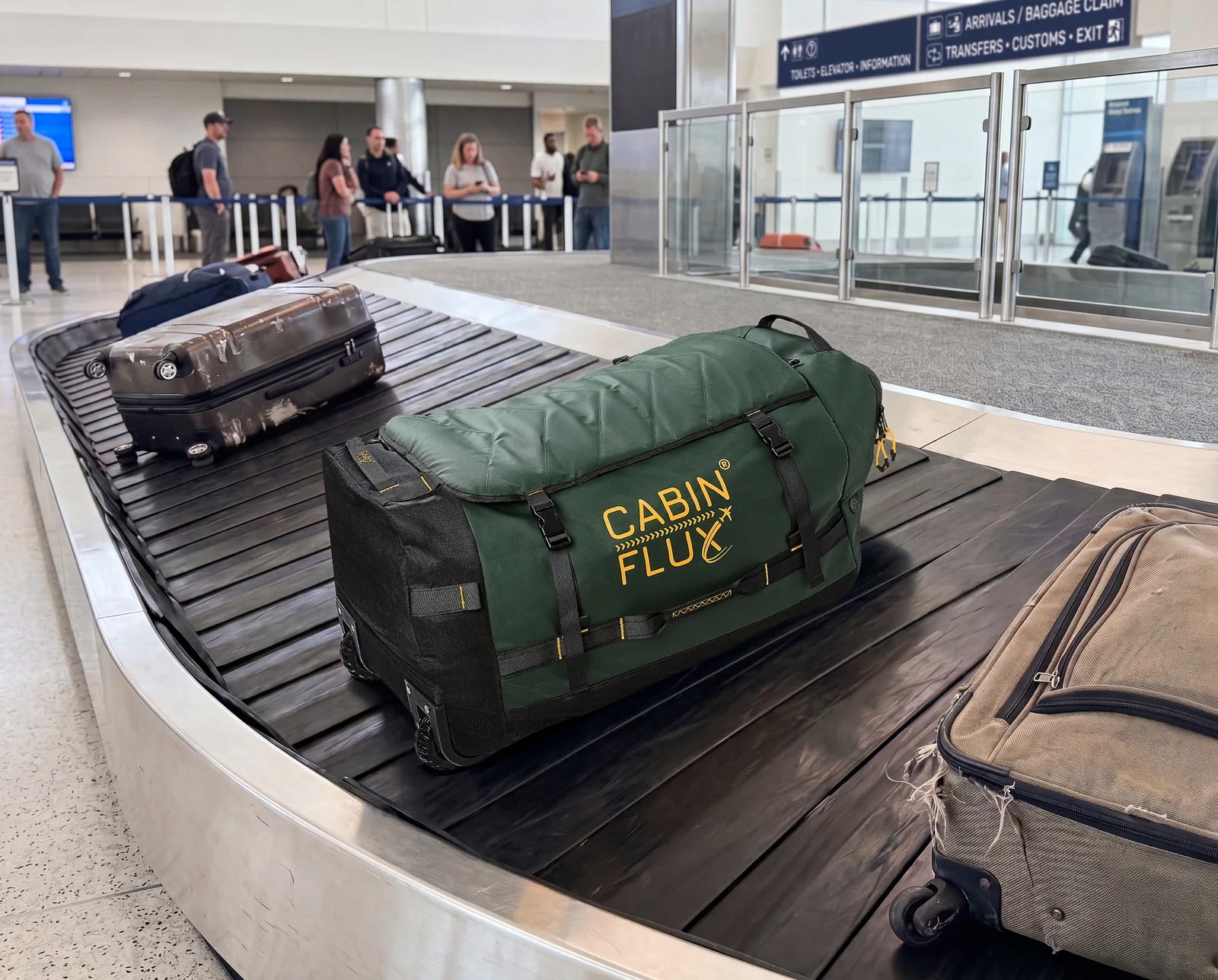
Checked baggage is refreshingly consistent: almost every airline in the world uses the same maximum size — 158 cm / 62 linear inches (height + width + depth) — and the standard economy weight allowance is 23 kg / 50 lb per bag. The battles are fought over weight, not size: between 23 and 32 kg you pay an overweight fee, and over 32 kg most airlines refuse the bag. The airline-by-airline chart is below, checked September 2026.
"Linear" means you add the three dimensions together, wheels and handles included. A 76 × 51 × 31 cm large suitcase adds up to 158 cm exactly; most 28–29″ cases and large duffles sit just inside the rule. Where carry-on rules are a maze of exceptions, the checked-bag question is almost always the same one: how much does it weigh?
US airlines
Every major US carrier uses the 62-inch rule. The standard first-bag weight is 50 lb (23 kg) — except the ultra-low-cost carriers, which cap checked bags at just 40 lb.
| Airline | Max size | Weight (economy) | Overweight allowed to |
|---|---|---|---|
| American | 158 cm / 62 in | 23 kg / 50 lb | 32 kg (fee) |
| Delta | 157 cm / 62 in | 23 kg / 50 lb | 32 kg (fee) |
| United | 157 cm / 62 in | 23 kg / 50 lb | 32 kg (fee) |
| Southwest | 157 cm / 62 in | 23 kg / 50 lb | 45 kg (fee) |
| JetBlue | 157 cm / 62 in | 23 kg / 50 lb | 45 kg (fee) |
| Alaska | 157 cm / 62 in | 23 kg / 50 lb | 45 kg (fee) |
| Spirit | 158 cm / 62 in | 18 kg / 40 lb | 45 kg (fee) |
| Frontier | 157 cm / 62 in | 18 kg / 40 lb | 45 kg (fee) |
Note Spirit and Frontier's 40 lb cap — a bag packed to the "normal" 50 lb is already overweight there. Checked-bag fees themselves vary by route and by when you buy; adding a bag online is always cheaper than at the airport.
Canadian airlines
| Airline | Max size | Weight (economy) | Overweight allowed to |
|---|---|---|---|
| Air Canada | 158 cm / 62 in | 23 kg / 50 lb | 32 kg (fee) |
| WestJet | 157 cm / 62 in | 23 kg / 50 lb | 32 kg (fee) |
| Porter | 158 cm / 62 in | 23 kg / 50 lb | 32 kg (fee) |
| Flair | 157 cm / 62 in | 23 kg / 50 lb | 32 kg (fee) |
European airlines
Full-service European carriers match the world standard. The budget carriers do it differently — they sell checked weight in tiers, so you pay for exactly the allowance you book, and their maximum bag dimensions are far more generous than 158 cm.
| Airline | Max size | Weight options |
|---|---|---|
| Lufthansa | 158 cm / 62 in | 23 kg economy · 32 kg business |
| British Airways | 90 × 75 × 43 cm | 23 kg standard · 32 kg with fee |
| Air France | 158 cm / 62 in | 23 kg economy · 32 kg business |
| KLM | 158 cm / 62 in | 23 kg economy · 32 kg business |
| Iberia | 158 cm / 62 in | 23 kg economy · 32 kg with fee |
| Aer Lingus | 158 cm / 62 in | 20 or 23 kg booked · fees above |
| Ryanair | 81 × 119 × 120 cm | 10 or 20 kg bags, booked |
| Wizz Air | 149 × 119 × 171 cm | 20, 26 or 32 kg tiers, booked |
| easyJet | 275 cm total | 15 or 23 kg booked, +3 kg steps to 32 |
On Ryanair, Wizz Air and easyJet a checked bag is never included in the basic fare — book it with the ticket, when it's cheapest. The size ceilings are roomy; the weight tier you bought is the number that matters.
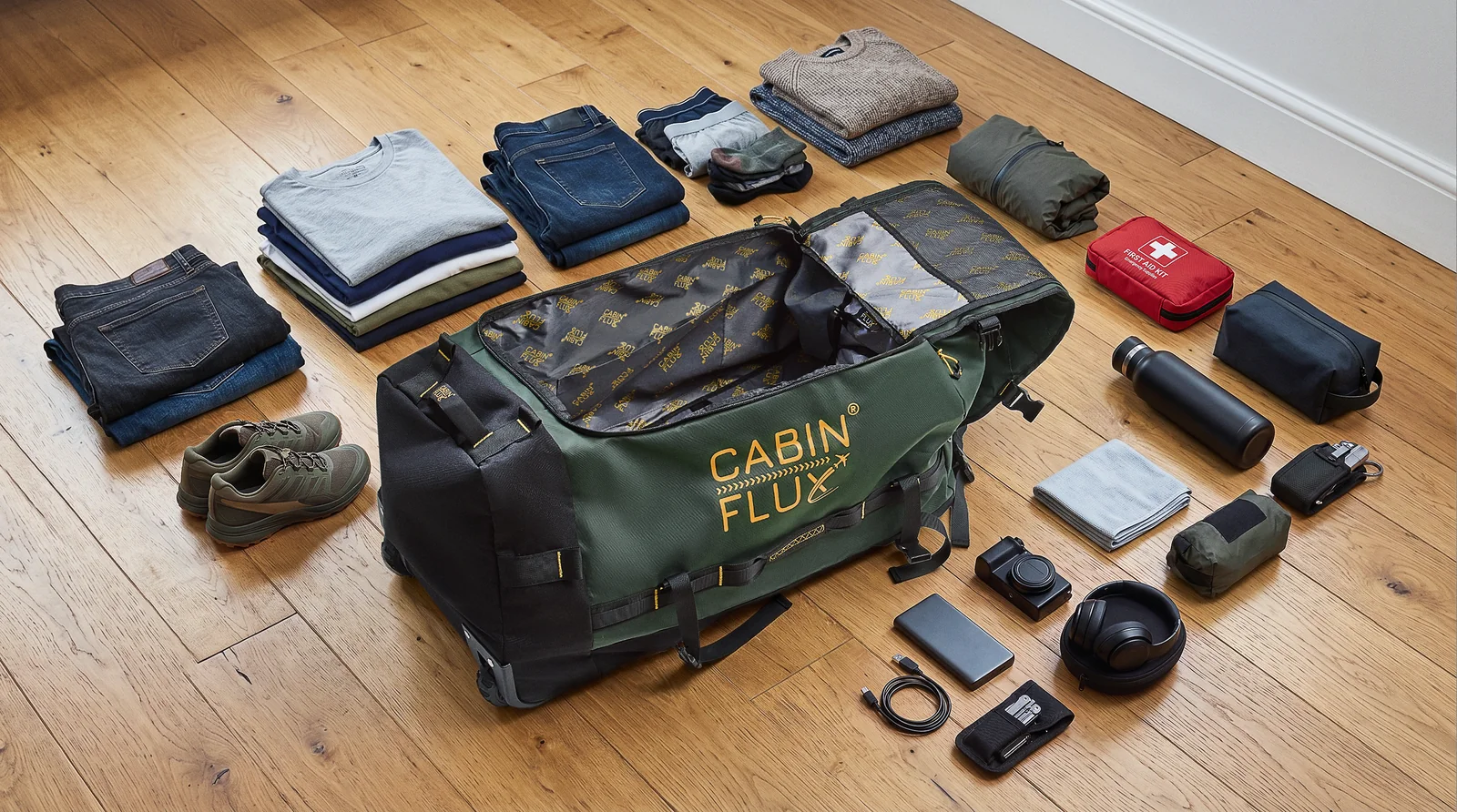
The weight game: empty kilograms are wasted kilograms
Here's the maths most travellers miss: the allowance covers the bag plus its contents. A traditional 28″ hardside case weighs 4–5 kg before you pack a sock — nearly a fifth of a 23 kg allowance gone. Pack light on the bag itself and you carry more of what you actually want:
- The Rolling Duffle 120L — 120 litres of hold-ready capacity at 2.7 kg empty, with a waterproof tarpaulin shell, reinforced wheeled base and a 79 × 40 × 38 cm footprint that clears the 158 cm rule. It's the bag we reviewed in depth — and it folds flat when you're home.
- The Buffalo duffles (77–112 L) — ballistic-nylon workhorses for gear-heavy trips, all inside the linear limit.
- The Apollo 28″ — an unbreakable polypropylene case at 4.3 kg that expands from 120 to 140 litres when the trip home is bigger than the trip out.
Flying out light and coming home loaded? That's the extra-bag trick: a flat-folding duffle rides out inside your carry-on, then unfolds and checks into the hold with the shopping on the way back.
Five rules that survive every airline
- Weigh the bag at home — a luggage scale costs less than any overweight fee ever charged.
- Measure linear, with wheels — height + width + depth, protrusions included. That's how the airline measures.
- Book the bag with the ticket — on every budget carrier the same bag costs two to three times more at the airport.
- Split, don't pay overweight — on full-service airlines a second 23 kg bag is usually cheaper than one 30 kg bag's fee.
- Assume 23 kg unless told otherwise — it's the world's default. The exceptions (Spirit and Frontier at 40 lb, budget tiers in Europe) are in the chart above.
Cabin bags are where the real airline-by-airline chaos lives — for those numbers see the 2026 cabin bag chart and the cabin size rules guide.
Sources — check your airline before you fly
Limits verified September 2026 against the carriers' official baggage pages: American · Delta · United · Air Canada · Lufthansa · British Airways · Ryanair · Wizz Air · easyJet. Airlines change allowances and fees without notice — the official page on the day you fly is the only number that counts.
The short version
Checked baggage is one rule and one number almost everywhere: 158 cm / 62 linear inches including wheels, and 23 kg / 50 lb in economy. Overweight costs extra up to 32 kg and is refused beyond it; Spirit and Frontier cap at 40 lb; Europe's budget carriers sell the weight you book. Weigh the bag at home, book bags with the ticket — and remember the allowance includes the bag itself, so a 2.7 kg duffle beats a 5 kg case before you've packed a thing.
Frequently asked questions
What is the standard checked baggage size?
Almost every major airline uses the same rule: height + width + depth up to 158 cm (62 linear inches), measured including wheels and handles. A typical 28–29″ suitcase and most large duffles sit comfortably inside it. The limit that actually varies between airlines is weight, not size.
How strict are airlines about the 23 kg weight limit?
Strict — the bag is weighed at the counter every time. Between 23 and 32 kg you pay an overweight fee, typically $75–$200 depending on the airline and route; over 32 kg most airlines refuse the bag entirely for handler safety. European budget carriers sell weight in tiers (usually 20, 26 or 32 kg) — you pay for exactly the allowance you book.
Can I check a duffle bag instead of a suitcase?
Yes — airlines treat a duffle exactly like a suitcase at the bag drop, and its light empty weight works in your favour: a 120-litre duffle that weighs 2.7 kg empty leaves about 2 kg more of your allowance for contents than a comparable hardside case. Choose one with a rugged waterproof shell and reinforced base so it shrugs off the baggage system.
What happens if my checked bag is overweight?
You have three options at the counter: pay the overweight fee, move items into your carry-on or a travel companion's bag, or split the load into a second checked bag — on most full-service airlines a second bag under 23 kg costs less than one bag over it. Weighing your bag at home before you leave avoids the whole scene.